
Expert Foundation Repair & House Leveling in Tyler, TX
Nestled in the rolling Piney Woods of East Texas, Tyler is famous for its roses and brick-lined historic districts. Geologically, Tyler foundations contend with iron-rich red clay subsoils (Bowie and Lilbert series) interspersed with acidic sandy loam. The dramatic rolling hills across Smith County subject residential foundations to lateral soil creep, water runoff erosion, and seasonal clay expansion that compromise perimeter footings.
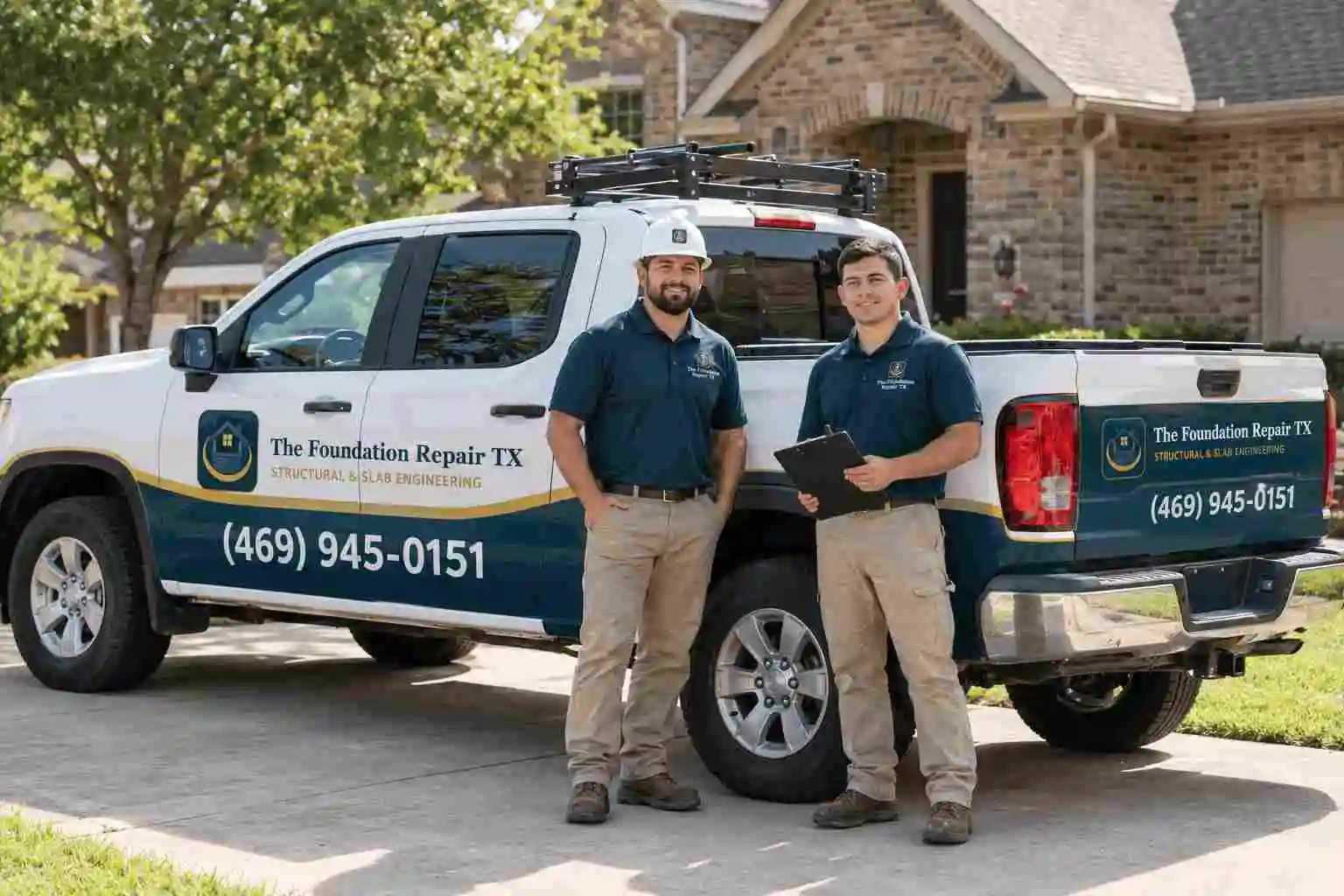
Serving Tyler & Smith County
Hydraulic Bedrock Piers • Slab Leveling • Crack Repair
Soil Composition & Foundation Dynamics in Tyler
The geological layers of the Claiborne group in East Texas consist of alternating sandy loams and dense red clays. On sloped parcels, rainwater infiltrates the permeable sandy surface layer and pools atop the impermeable red clay subsoil, creating a slick slip-plane that can cause hillside foundation creep.
Bowie and Lilbert fine sandy loam over iron-rich red clay subsoil and greensand
Moderate to High Plasticity in Clay Sub-Horizon
Surface sand easily washes away; dense underlying red clay swells upon moisture infiltration
How Tyler's Weather Affects Residential Foundations
Humid subtropical Piney Woods climate with 46+ inches of annual rainfall, lush pine canopies, and warm humid summers.
The Drought-Deluge Cycle: Heavy spring rainfall cascades down sloped lots, eroding topsoil away from foundation footings. In late summer, tall pine trees consume hundreds of gallons of water per day, desiccating the red clay beneath perimeter slabs.
Spring severe storm season (March-May) and late summer tree root transpiration cycles (July-September).
Need an Inspection in Tyler?
Our Tyler technicians carry digital manometer altimeters to provide exact elevation differential readings.
Local Housing Insights & Neighborhood Vulnerabilities in Tyler
Construction methods across Tyler vary sharply depending on when and where subdivisions were developed. Understanding the era of your home provides critical clues to its foundation vulnerabilities.
1920s-1940s historic brick estates in the Azalea District, 1960s ranches in Green Acres, and golf course executive homes in Hollytree and The Cascades.
Historic brick Tudor and colonial crawlspace homes, custom multi-level hillside slabs, and conventional post-tension foundations.
Azalea Residential Historic District, Lake Tyler, Tyler Rose Garden, and University of Texas at Tyler campus.
Hillside slope erosion undermining footing pads, mature pine tree roots causing differential settlement, and bouncy wood subfloors in historic crawlspaces.
Featured Tyler Neighborhoods We Routinely Service
Historic brick and stone residences on sloped terrain where failing masonry piers and tree root intrusion cause sloping hardwood floors.
Executive golf course community where custom slab-on-grade homes experience differential deflection along walk-out patios.
Lakeside luxury homes where hillside topography and lake moisture require deep steel underpinning to stable strata.
Established mid-century ranches with exterior brick veneer cracks running from foundation to eaves.
Surrounding Suburbs & Municipalities in Smith County
“Our home in the Azalea District had noticeable floor slope and a sticking front door. The Foundation Repair TX team treated our historic home with great care, installed supplemental crawlspace steel beams and jack stands, and leveled our floors perfectly.”
Schedule a Free Inspection in Tyler
Serving Tyler and all surrounding Smith County neighborhoods. Free multi-point elevation survey and clear answers with zero high-pressure sales.
Frequently Asked Questions: Tyler Foundation Repair
Clear, practical engineering answers addressing local soil conditions, caliche strata, and building styles across Tyler.
How does rolling East Texas topography accelerate foundation settlement in Tyler?
Many homes in Tyler are built on natural hillsides. Stormwater runoff rushes down the slope, washing away topsoil on the downhill side while pooling against the uphill foundation beam. This hydrostatic pressure imbalance pushes and tilts the structure over time, requiring deep underpinning on the downhill side.
Why do Azalea District historic homes experience crawlspace bounce and uneven hardwood floors?
Homes in the Azalea District were built in the 1920s-1940s on brick or bois d'arc timber piers. Decades of damp crawlspace humidity, soil settlement, and wood fatigue cause the central joists to sag, creating floor bounce, squeaks, and separation along baseboards.
Can large pine trees damage a concrete slab foundation in Tyler?
Yes. Mature East Texas pines absorb up to 150 gallons of moisture daily during hot summer months. Their aggressive root networks draw water directly from beneath the perimeter foundation beam, causing localized soil collapse and corner slab drop.
How deep are piers typically driven in Smith County?
In Tyler and Smith County, steel push piers are typically driven 15 to 28 feet through surface sands and active red clays until reaching dense ironstone or consolidated shale bedrock.
Foundation Services Available in Tyler
Explore our core structural repair capabilities deployed across Smith County.
Foundation Crack Repair
Epoxy injection, carbon fiber reinforcement, and hydraulic structural stabilization for interior slab and exterior brick cracks.
Concrete Slab Foundation Repair
Pressed concrete pilings, steel piers to load-bearing bedrock, and poly-foam void filling for shifting slab-on-grade homes.
Pier and Beam Foundation Repair
Crawlspace leveling, rotten sill plate replacement, joist reinforcement, and masonry pier re-shimming for classic Texas homes.
House Leveling & Re-Shimming
Precision hydraulic laser leveling to restore unlevel floors, sticking doors, and sloping room elevations back to original grade.
Comprehensive Foundation Inspection
Accurate multi-point elevation mapping, exterior grade assessment, and structural integrity evaluations with zero high-pressure sales.
Protect Your Tyler Home Against Soil Movement
Schedule your free multi-point elevation survey in Tyler today. Call directly to speak with an experienced Texas foundation specialist.