Texas Licensed Structural Repair Specialists
(469) 945-0151
Structural ComparisonsPublished: March 02, 2025•11 min read•2,240 Words

Pier and Beam vs. Slab Foundation Repair in Texas: Structural Differences, Costs, and Repairs

An architectural and structural guide exploring crawlspace vulnerabilities, moisture management, post-tensioned slab jacking, and repair costs across Texas homes.

Marcus Vance, PE
Lead Structural Diagnostic Specialist • MS Structural Engineering, Texas Registered Professional Engineer
Verified Structural Accuracy
Pier and Beam vs. Slab Foundation Repair in Texas: Structural Differences, Costs, and Repairs
Executive Summary & Key Takeaways
  • Monolithic concrete slabs sit directly on the ground, making them vulnerable to soil heave and requiring deep perimeter underpinning when settling occurs.
  • Pier and beam foundations elevate living areas above a crawlspace, making plumbing repairs and structural leveling significantly more accessible.
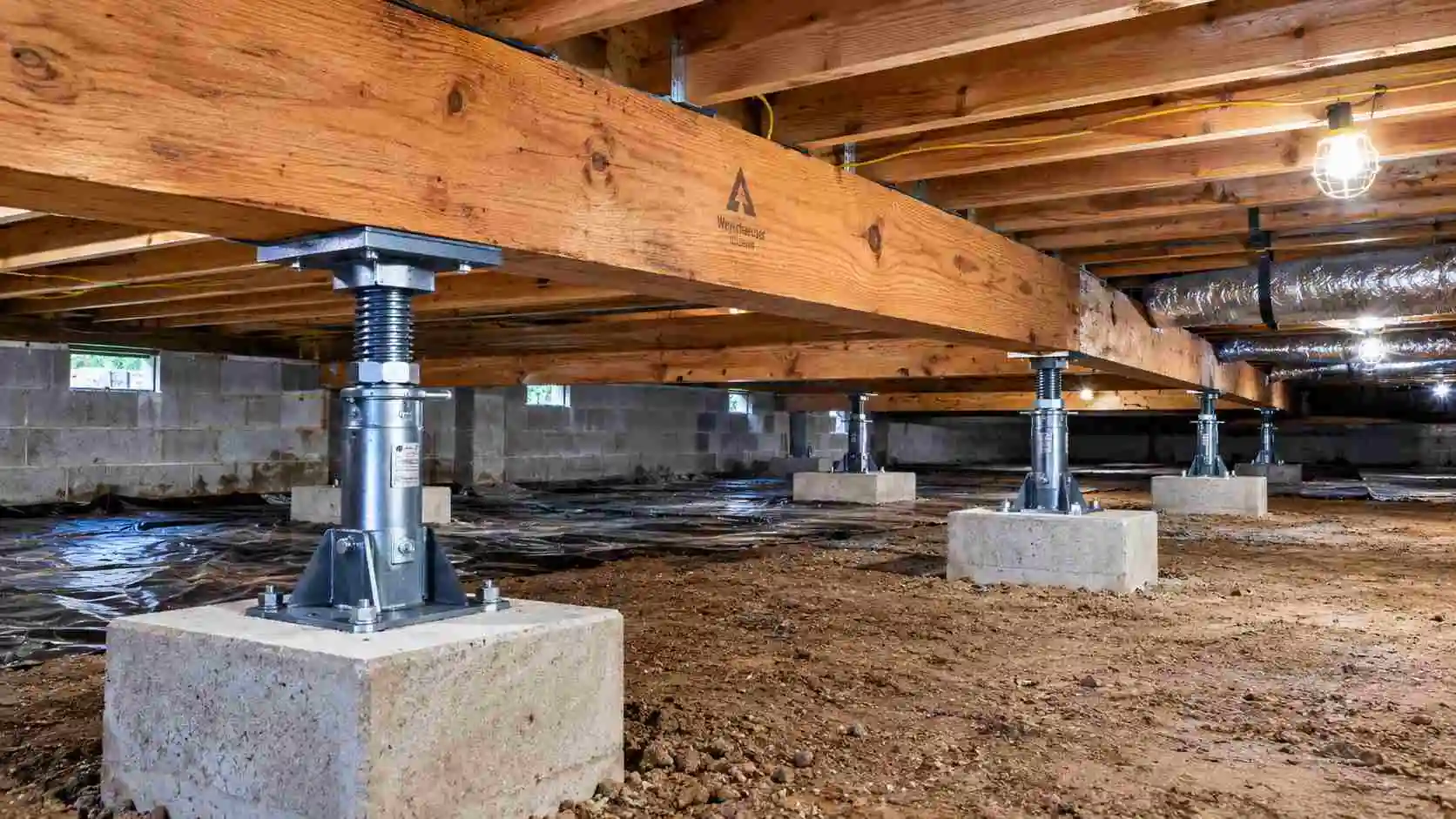
  • Crawlspace repairs typically involve replacing rotted sill plates, adding concrete pads, and installing adjustable screw jacks, averaging $3,500 to $8,500.
  • Concrete slab repair requires exterior hydraulic piering or polyurethane foam lifting, with projects averaging $4,500 to $12,000+.
  • Moisture is the primary enemy of both systems: crawlspaces suffer from wood rot and humidity, while slabs suffer from differential clay shrinkage and under-slab leaks.

1. The Texas Residential Architectural Landscape

Across the state of Texas, residential construction is dominated by two primary foundation styles: modern slab-on-grade concrete foundations and traditional pier and beam (crawlspace) foundations.

Prior to the 1960s, the vast majority of Texas homes were constructed with pier and beam systems. These elevated wood-frame homes accommodated sloping terrain and allowed air circulation underneath in hot summer months. Starting in the late 1960s and 1970s, production homebuilding shifted heavily toward slab-on-grade foundations due to speed of construction and lower initial material costs.

Both systems have distinct structural characteristics, failure modes, and repair approaches in Texas expansive soils. Understanding how each foundation type reacts to high plasticity index clays helps homeowners take preventive measures before serious structural damage manifests. Learn more about sub-slab physics in our Texas expansive clay soil engineering guide.

Structural Engineering Perspective: Foundation Rigidity vs. Flexibility

A concrete slab is designed to act as a rigid structural plate resisting bending moments, but when sub-slab soil moisture changes drastically, the concrete will crack. A pier and beam structure is inherently flexible, allowing minute adjustments through shimming, but it requires continuous protection against crawlspace moisture and wood rot.

2. Concrete Slab-on-Grade: Design and Failure Modes

A modern Texas slab-on-grade consists of a 4- to 5-inch thick concrete floor slab poured monolithically with deep perimeter and interior grade beams (often 24 to 36 inches deep). In newer construction, high-strength post-tensioned steel cables are threaded through the slab and tensioned to thousands of pounds after pouring.

Because the slab rests directly on top of the soil, it absorbs every movement of the clay underneath. Common failure modes include:

  • Center-Dish Deflection: The perimeter beams drop while the interior slab remains elevated, creating high tension in the center of the slab.
  • Edge Heave: Saturated soil around the perimeter lifts the exterior walls while the center remains low, causing interior wall cracks.
  • Corner Shear: Diagonal cracking across exterior corners where unsupported concrete breaks away under dead weight.
  • Post-Tension Cable Spalling: Corroded post-tension anchors snapping and blowing out through the perimeter concrete edge.

3. Pier and Beam Crawlspaces: Components and Vulnerabilities

A pier and beam foundation elevates the structural floor framing 18 to 36 inches above ground level. The perimeter is typically supported by a continuous concrete grade beam or curtain wall, while the interior weight is supported by a grid of concrete pads, brick columns, or treated wood posts. When interior posts settle or wooden girders weaken, property owners turn to specialized pier and beam foundation repair to restore structural load paths.

Resting atop these piers are heavy wooden beams (girders), which in turn support floor joists and plywood subflooring. Because the floor framing is made of wood, it is subject to organic deterioration.

  • Rotted Wooden Sills and Joists: Humid crawlspaces cause wood decay, resulting in spongy, sagging floors.
  • Pier Shifting and Sinking: Interior concrete pads resting on shallow ground can settle into mud if rainwater ponds in the crawlspace.
  • Termite Infestation: Subterranean termites construct mud tubes up masonry piers to feed on floor joists.
  • Shimming Deterioration: Older wooden shims installed between piers and beams compress or rot over time, causing floors to sag.

4. Wood Rot, Termites, and Crawlspace Humidity in Texas

In the humid climates of East Texas, the Gulf Coast, and Central Texas, crawlspace air can hold immense amounts of moisture. When warm, humid outdoor air enters crawlspace vents and contacts cooler subfloor lumber, condensation forms. Coastal communities such as Beaumont and Southeast Texas and timberland areas like Longview in East Texas experience heightened wood rot risks that require proactive drainage and crawlspace encapsulation.

When wood moisture content exceeds 20%, wood-decay fungi (such as Serpula lacrymans and Coniophora puteana) begin feeding on the cellulose fibers. This leads to dry rot and wet rot, turning structural 4x6 girders and 2x10 joists brittle and spongy.

Subterranean termites thrive in this moist microclimate, tunneling upward to consume structural supports. Crawlspace remediation often requires wood sistering (bolting new lumber alongside damaged beams) combined with moisture encapsulation.

Direct Texas Engineering Support

Notice These Symptoms on Your Texas Property?

Speak with our senior foundation diagnostics team today for a free on-site elevation assessment.

Call (469) 945-0151

5. Crawlspace Drainage and Sump Pump Engineering

One of the most destructive scenarios for a Texas pier and beam home is standing water beneath the subfloor. When heavy spring thunderstorms hit, surface runoff can seep under the perimeter grade beam or through access wells.

Standing water saturates the shallow soil supporting concrete block pads. Over saturated mud, pads sink under the dead load of the house, resulting in severe hallway dips and jammed bedroom doors.

Remediating standing crawlspace water requires an interior drainage system: digging a perimeter gravel trench with perforated corrugated piping routed to a sealed, dual-pump submersible sump pit equipped with battery backup.

  • Install perforated 4-inch drainage pipe embedded in washed pea gravel along low crawlspace contours.
  • Equip sump basins with heavy-duty cast-iron submersible pumps discharging water at least 15 feet away from exterior walls.
  • Install check valves and freeze-proof discharge lines to prevent backflow during severe winter weather.

6. Subterranean Termite Defense and Mechanical Shields

Texas is classified in the highest hazard category (Zone 1) for subterranean termite activity (Reticulitermes flavipes and Coptotermes formosanus). Pier and beam crawlspaces offer ideal conditions for these insects: darkness, moisture, and direct proximity to structural lumber.

Termites construct mud tubes up masonry piers to bypass concrete foundations and attack wooden sill plates. If left unchecked for several seasons, termite colonies can hollow out structural 4x6 girders, causing floor framing to collapse.

Mechanical termite shields (heavy-gauge sheet metal plates with down-turned 45-degree lips installed atop concrete piers) force termites to build mud tubes outward where they become immediately visible during routine visual inspections.

7. Crawlspace Encapsulation vs. Traditional Venting in Texas Climates

For decades, Texas building codes required open foundation wall vents, operating under the theory that outdoor air circulation would dry out the crawlspace. In hot, humid Texas summers, however, venting actually introduces humid 90-degree air into a cool 72-degree crawlspace, triggering chronic condensation along ductwork and subfloors.

Modern building science overwhelmingly favors full crawlspace encapsulation: sealing all perimeter vents, laying a heavy 20-mil fiber-reinforced antimicrobial vapor barrier across the entire dirt floor and walls, and installing an energy-efficient crawlspace dehumidifier.

Encapsulating a Texas crawlspace eliminates wood rot, prevents musty odor infiltration into living areas, protects HVAC ductwork from rust, and reduces residential cooling energy consumption by 15% to 22%.

8. Moisture and Environmental Stressors: Slab vs. Crawlspace

Moisture affects slabs and crawlspaces in fundamentally different ways.

For slab homes, the primary danger is uneven perimeter soil moisture. When the soil around the house dries out faster than the soil underneath the center, differential settlement occurs. Furthermore, an undetected under-slab water leak can saturate sub-base clay for months before being diagnosed.

For pier and beam homes, the primary concern is trapped crawlspace humidity. Without adequate cross-ventilation or sealed encapsulation, crawlspaces become humid microclimates where wood moisture content exceeds 20%, breeding wood-decay fungus.

9. Repair Methodologies Compared

Repairing a concrete slab requires heavy hydraulic machinery. Crews install pressed concrete or steel piers around the perimeter grade beam through engineered slab foundation repair to lift the home back into alignment. If the interior slab has settled, repairs require either breaking through interior floors or hand-digging tunnels beneath the home.

Repairing a pier and beam foundation is generally less disruptive. Technicians enter the crawlspace through an access hatch. Using hydraulic bottle jacks, they lift individual beams, replace rotted wood members, pour new concrete footings, and execute precision house leveling to restore floor plane geometry. The living area above remains completely undisturbed throughout the process.

10. Side-by-Side Comparison Matrix

Compare the key differences between both foundation styles.

Comprehensive Comparison: Pier & Beam vs. Concrete Slab Foundations
Feature / MetricPier and Beam (Crawlspace)Concrete Slab-on-Grade
Average Repair Cost$3,500 to $8,500$4,500 to $12,500+
Ease of Plumbing AccessExcellent: Pipes are suspended and fully accessible in crawlspaceDifficult: Pipes are encased inside or underneath concrete
Living Space DisruptionMinimal: All work takes place underneath the houseModerate to High: May require interior breakout or tunneling
Primary Failure CauseWood rot, crawlspace moisture, shifting interior padsExpansive clay shrink-swell, differential settlement
Thermal InsulationRequires subfloor insulation batts to prevent cold winter floorsNaturally insulated by ground thermal mass
Flooring FlexibilityWood framing provides natural walking spring and cushionHard, rigid concrete feel underfoot
Typical Lifespan Before Leveling10 to 15 years before minor reshimming needed15 to 30 years before major underpinning needed

11. Living With and Maintaining a Pier and Beam Home in Texas

To keep a pier and beam foundation stable for decades, homeowners should follow a regular crawlspace maintenance routine:

  • Keep perimeter crawlspace vents clear of vegetation, mulch, and debris to ensure continuous cross-ventilation.
  • Install a heavy-duty vapor barrier across 100% of the exposed crawlspace soil floor to prevent rising moisture vapor.
  • Inspect crawlspaces annually for signs of standing water, termite mud tubes, or sagging floor joists.
  • Ensure downspouts and surface drainage direct rainwater at least 5 feet away from the crawlspace perimeter wall.

12. Living With and Maintaining a Concrete Slab Home

Concrete slab maintenance focuses heavily on exterior soil moisture stabilization:

  • Run soaker hoses 12 to 18 inches from the foundation during hot Texas summer months to prevent soil contraction.
  • Maintain a 5% slope away from the home for the first 10 feet of perimeter grade.
  • Monitor monthly municipal water bills for sudden spikes that may indicate a concealed under-slab plumbing leak.
  • Trim tree roots encroaching within 15 feet of the foundation or install deep root barriers.

13. Real Estate Resale Value and Inspection Differences in Texas

In the Texas real estate market, buyers and appraisers evaluate slab and pier and beam homes differently:

For slab homes, buyers scrutinize exterior brick cracks, interior door clearances, and require hydrostatic plumbing tests. An unlevel slab often leads to lender financing delays on FHA and VA loans until certified engineer clearance letters are produced.

For pier and beam homes, home inspectors physically enter the crawlspace with protective suits and moisture meters. They inspect for active fungal rot, wood-destroying insect damage, and loose or makeshift pier shims. Scheduling a professional foundation inspection and elevation survey with certified teams in areas such as College Station provides buyers and sellers with certified baseline documentation, eliminating negotiation bottlenecks and accelerating closing timelines.

14. Frequently Asked Questions: Pier and Beam vs. Slab

Common homeowner questions regarding structural differences and repair feasibility.

Frequently Asked Questions

Expert Answers on This Topic

Frequently Asked Questions

Clear, straightforward answers about Texas foundation repair, soil conditions, and engineering procedures.

Yes, in most cases. Pier and beam repairs typically cost between $3,500 and $8,500 because crews can access structural members directly from inside the crawlspace without the expensive excavation, concrete breakout, or heavy steel piers required for slabs.
Continue Reading

Related Engineering Guides

Immediate Texas Dispatch Available

Stop Foundation Damage Before Cracks Spread Further

Texas expansive clay soils don't improve on their own. Get a certified multi-point elevation survey and clear repair roadmap today with zero high-pressure sales.

100% Free Elevation Surveys
Transferable Lifetime Warranties
Licensed Structural Specialists
Free Texas Inspection
(469) 945-0151
Call Now